
Ten Highlights of My Sixties
Updated: Nov 18, 2025

1. A Birthday Present in London

Natalie and I had enjoyed two successful visits to Belgium in 2012; our friendship became stronger, and we saw each other regularly. We had a further short journey together into Wales, where we went to the Marian shrine in Cardigan before visiting Sarah Boss and the Centre of Marian Studies, then in Lampeter. We played a few boardgames, and Nat put up with my cooking when she came over to Knaresborough, although we often went to the South Asian restaurant in town too.
As my sixtieth birthday approached, Nat made an announcement. I was to keep a couple of days free at the end of January, and she was going to take me to London for an undisclosed event to celebrate my big birthday (Nat enjoys surprises!).
What could it be? I couldn’t resist a bit of googling to see what was on in London on the arranged date. All I could come up with was the musical Rock of Ages. I knew that Nat’s friend Amy was a big Rocky Horror Show fan, and Nat knew that I liked the rock music of the late 60s and early 70s. So it made sense. But the trouble was that the idea didn’t grab me; I have never been that fond of musicals. If that’s where we were going, I would just have to make the best of it and smile politely. And so we took the train from Manchester to London, and booked into a small hotel which, given that it was in the capital, will have cost Nat an arm and a leg.
I’m so glad that my research was poor, as the effect of expecting Rock of Ages made the actual destination much more magical. It was 30 January 2013, the fiftieth anniversary of the composer Poulenc’s death – why hadn’t I known that? In a church in Holborn, an excellent choir and small instrumental ensemble put on a testimonial to the great man. Nat knew that I had become a devoted Poulenc fan in my fifties.
It was a brilliant concert, the first of many Poulenc recitals that Nat and I have attended over the years. She became fond of his music too, being a childhood pianist. His works for unaccompanied choir are really powerful when sung live. The evening included a meal, and then we spent the next day travelling around Marian shrines in London, for which Nat had prepared an itinerary. The uncertain student was now revealed to be a skilled organiser.
There are plenty of Marian sites in the capital: the site of a medieval religious house near the Tower which now boasts a grand church, churches and statues in the West End and in Clapham, the revived medieval shrine at Willesden with its holy well and black Madonna. They are all on the shrine map of Britain and Ireland that I drew up at the time of my great shrine tour. And so we did a miniature version of my shrine hopping the decade before. Of course we also played boardgames, causing a stir in a London pub when we pulled out a board and several small wooden farm animals. A bit different from your average game of dominoes or cribbage.
Nat had the knack of knowing exactly what would make a great sixtieth birthday celebration, albeit three weeks after the birthday itself (for which Poulenc is responsible!). I had enjoyed a meal in the excellent Café No. 8 in York with colleagues on the actual birthday, so all in all it was a pretty good month. Nat and I were still some distance from making the jump into a proper relationship, but we were certainly close, and this made my entrance into the sixties all the sweeter. You imagine when you are twenty that you will be near suicidal on arriving at an age with a six on the front, and in my case, worse, because I still hadn’t found that great romantic relationship that I yearned for in my youth. But, in all honesty, I had outlived any mid-life crisis and had made peace with my destiny as a life-long bachelor. Little did I know! Those few days in London certainly reawakened a sense of expectation and wondering whether I might have found the love of my life after all.
2. Shy and Retiring
Sometime in the late 2000s, I made a decision to retire, or at least semi-retire, early. I found out that, in teaching, sixty was the earliest age when you could take your pension and the associated lump sum. The Head of Programme job was intense, and didn’t leave me with a great deal of time for proper academic writing. I wanted to complete the book on Marian apparitions that had been so many years in the making. Going down to half-time would make this possible, and the lump sum would pay off what was left of my mortgage.
I would never have made that decision if I had known that I was to take on family life! I would have kept my head down for a few more years, built up my pension pot further, and saved like a maniac! But we didn’t know about the coming ‘cost of living crisis’ then and, as a single man, retirement made a lot of sense. To live in a house that had been fully paid for, and to have half my time for writing, with (hopefully) several years left compos mentis – all that seemed a very good prospect.
The pension regulations required me to leave my job fully before resuming it part-time. There had to be at least one day when I was not employed, officially. So I chose Friday, 30 August 2013 as my in-between day. I would leave work on the 29th, and return on Monday, 2 September to a smaller office that would befit my half-time employment.
Earlier that Summer, Nat and I had enjoyed a brilliant holiday in my favourite place, the Auvergne in southern France. Now there were two people in love with it (and in 2025 we still are, and we're very excited about our forthcoming trip there, the first since 2017!). Nat made her famous statement at Estours: ‘You told me it would be beautiful, but I didn’t think it would be this beautiful’. Our photograph at the Chapel of Mary Magdalene at Chalet (see the top of this blog), with the two of us arm in arm, caused a stir when we both, independently, put it on Facebook. I think that most people could see a romance in the making. Poulenc, the Auvergne, boardgames – Nat knew the way to a man’s heart (and she is a very good cook, too!).
After the holiday, I made the final arrangements to hand the Undergraduate Head of Programme post to my colleague Gill and looked forward to taking up a seat on the back benches. The end of August came quickly. A one-time undergraduate student, Laura, wanted to visit. Now that she was a teacher, my day off on 30 August worked well for her, and so she shared the day with me. It went so wonderfully smoothly. During the morning, the lump sum was paid, and my mortgage came to its end. I found it hard to believe that no one at Teachers’ Pensions or the bank threw up a glitch to make me wait for a few days. The efficiency of it all was a very pleasant surprise. It is difficult to describe the sense of relief when a mortgage is finally laid to rest, and the house is yours. Then, barring disasters, you will have no more mortgage or rent payments to pay for the remainder of your earthly existence (and we can assume that the afterlife demands none either!). I felt very contented that day, and enjoyed a lunchtime pint with Laura in Knaresborough town centre. I can’t really remember what we did, just that really pleasant feeling. And so, the rest of my life made the first of its many new starts during my sixties!
The new work regime began in September. In November, I accompanied Gill with a group of students to Krakow in Poland, from where we visited Auschwitz, a heart-breaking but important part of one’s education, and I made a personal visit to Poland’s national Marian shrine at Jasna Góra in Częstochowa. Generally, I was relaxed in my new role. But I did not sit on the back benches for long. As we neared Christmas, Richard asked to speak to me, He had been invited to spend a year with the Church of England diocese of Leeds, standing in as its temporary Director of Education. The diocese was new, having been formed from the break-up of previous dioceses in the area. The University had agreed to the arrangement. Richard asked me if I would act as Head of Department during his time away. Did my part-time retired status present a problem, I asked, fearful that I would be going back to full-time. No, not at all, he said, clearly having had conversations to check this with senior management. It would just mean that I didn’t do any teaching for the year.
I suspected that Richard was being prepared to become the permanent Director of Education of the diocese, and that his job would become vacant; I was right. So the year turned into nineteen months before the new Head of Department, another Richard (Richard II?) was recruited and took the reins. I don’t think that there was any prospect of my taking it on permanently as a part-timer. But I enjoyed finally making it to the top job in Theology & Religious Studies, even as a stand-in. Unwelcome batches of ill health affecting key people didn’t make it easy, but we got through. Two of my colleagues, Greg and Andy, were really important in supporting me and others through that period.
And so retirement wasn’t the gradual letting go that it had promised to be. I can’t imagine that many people get promoted just after retiring! But fortunately, I did have the other half of my time free and so the book got written. In actual fact (and teachers will not be surprised at my saying this), being in management for the whole of my working hours proved to be less time-consuming and intense than teaching.
3. Meeting at the Well

Wells are great places for romantic encounters. I know this from reading Snow White to my daughter. In the Bible, at a spring for watering animals, Rebekah was persuaded to become the wife of Isaac, and Rachel met Jacob by a well, too. As 2014 dawned, I realised with ever greater force that it was now or never for Nat and me to get together. She wasn’t going to wait for ever. I couldn’t let a little thing like being Head of Department get in the way, despite the fact that Nat was still in the final stages of her M.A.! I needed to take a deep breath, and take the plunge.
Why had I waited so long, given that Nat and I had enjoyed Belgium, London, the Auvergne and, looking back, now regard these trips as being part of a relationship even if it wasn’t official yet? The thing was that I was entering my sixties and Nat was still in the first half of her twenties. I was all too aware that wanting a romantic relationship could end up being something of an illusion. But, by the beginning of 2014, I had definitely moved from great fondness to being in love, and I needed to find out if Nat felt that too. The feeling had grown stronger the more we did together.
Nat had discovered a little shrine in the Goyt Valley near to Buxton, and so I suggested going to see it. We agreed to meet at St Anne’s Well in the centre of Buxton and move on from there. It was a very appropriate rendezvous point for the great Mary shrine hoppers. Anne (a name derived from the Hebrew Hannah) is the mother of Mary, and statues of her often show her teaching her daughter to read, a nice piece of female empowerment in a patriarchal church which denied female education for so long. The one at Buxton does depict Mary as a little girl, but standing and not reading.
The date was Sunday, March 2nd, an important date in my life. March 2nd is the anniversary of the last apparition in Banneux which had triggered my interest in apparitions of Mary when I saw the fiftieth anniversary announced in Westminster Cathedral in 1983. More tragically, it was the date that my brother Andy and sister-in-law Trish’s adopted son, Aaron, had died in 2012 at the age of 28. He had been my niece Katie’s schoolmate and was a wonderful character, a gay blind guy with a sparkling sense of humour. Unfortunately, he also had terminal kidney disease after failed transplants. So March 2nd had powerful associations, and now it became the date that Nat and I became a couple.
We have a selfie that we took at the well. I look very nervous because I couldn’t keep my face still enough to smile, so I put on a silly face, but Nat had no idea what was about to happen, and therefore she looks calm and cheerful as well as very pretty! As we walked from the well to walk to a nearby café, I took her hand. When we sat down, I apologised for how weird it might feel for us to be walking hand in hand through Buxton, aged 24 and 61 respectively. Nat came out with one of her classic quotes: ‘The weird thing about it is how much it is not weird’. That was very reassuring, and I didn’t look back from that point on. It all felt very natural and destined-to-be. It didn’t require any nervous effort at all. And we both talked about how we had had feelings for some time, now that we were able to be open about it.
Surprise, surprise, there was a lot of kissing! When we kissed by the little shrine in the Goyt Valley, I moved suddenly towards Nat, and she swallowed her chewing gum! For all we know, it is still there in her gut, a testimony to that wonderful day. When we parted from each other, I felt pretty good. I didn’t see her for another ten days, because I was visiting my sister’s family the following weekend, and spent it feeling a combination of excitement at seeing Nat again, and nervousness that she might have changed her mind. Of course, she hadn’t! After the next couple of meetings, we both had sore lips from kissing so much.
Because Nat was still a student, I had to communicate the fact that we were in a relationship to the university staff. Fortunately, everyone was really supportive; given that Nat had been an undergraduate student just three years previously, I might have expected a little more disbelief or disapproval, but there was none. Richard popped in and I told him over lunch, and he was likewise very supportive. Nat finished her M.A. that Summer, after an all-nighter on her dissertation the night before we flew to France for a holiday in August. Naturally, I could not be involved in the marking of the work although, given that it was on Mary and art, I would have been an obvious choice if we had not been together. Over Nat’s whole M.A., I marked just one of her essays (before the relationship started, of course). It was parallel second marked, and the other marker gave 1% higher, which irks Nat but at least it establishes that I didn’t show any favouritism!
Another of my curious coincidences was involved. In 2008, when Nat and her fellow year group arrived at York St John, I made something of a blunder. Aware that some new students didn’t go home after the initial welcome week and were quite lonely, I decided to arrange an outing to the cinema on the Friday night, and put it on the programme. Unfortunately, the cinema offerings that weekend were mostly dross, with only one decent film showing, starring Ben Kingsley and Penelope Cruz. When I checked out the storyline, I groaned. It featured those two as a lecturer in a relationship with a student. Because it was on the programme, I was obliged to go ahead with it – the alternatives were too poor – and announce the storyline in advance rather sheepishly to avoid the students suddenly discovering it and feeling threatened in any way.
In the event, only two students showed up. One was a mature student who lived in York and said that she would meet the group at the cinema. I had agreed to meet the younger students on campus and take them to the cinema, but only one, Amy, turned up. The rest had gone home for the weekend. I gave Amy the opportunity to drop out if she wanted, but she was adamant that she wanted to go. I was impressed by her; she made the best of what could have been an embarrassing situation. We developed a friendship that night which lasted for the whole three years and beyond.
When I noticed that Nat was struggling in her first term and didn’t know many people, I introduced her to Amy, who had already made a few friends and seemed more at ease. Nat and Amy became firm friends too, and lived together during their second year. Being friendly with Amy meant that I was now friendly with Nat. Scrolling forward a few years, a few months after our rendezvous at St Anne’s Well, we attended Amy’s wedding to Chris in Durham where she still lives.
In the film, Ben Kingsley’s lecturer fell in love with Penelope Cruz’s student, but it turned out that she was a postgraduate student. At the time, this had made the evening out feel a little less embarrassing; at least she was not an undergraduate. The film forged a connection between myself and Amy which led me to know Nat well; perhaps that would have developed anyway, but we will never know. And, of course, when we got together six years after that film, Nat was a postgraduate, although there the parallels end. The relationship in the film came to an unhappy end before it became a long-term one, but ours didn’t.
4. Wedding Day

When Nat and I crossed the boundary between friendship and relationship, it was only a matter of time before we got married. The hard work had been done; we had gained each other’s trust. We had known each other for six years and had been away together a few times; we liked the same things, and wanted to do the same things. We were both Mary geeks. The age gap was clearly not an issue for us or for anyone else. I was accepted by Nat’s family, and she by mine. I told her very early in the relationship that marriage was a clear option, and that she should be ready for a proposal! It came on a rainy evening on 21 November 2014 when she was visiting Knaresborough. I asked her to go along with me to the Chapel of Our Lady of the Crag, and there in the dim candlelight before the statue of Madonna and Child, with no one else likely to intrude in the dark evening and inclement weather, I proposed. There was never a doubt. Nat was now doing a postgraduate teacher training course in Manchester lasting one year and, when it was over, we would get married as soon as we could.
The usual warnings about planning a wedding a long way ahead to get the best venue and the day you wanted didn’t seem to get through to us. We were totally naïve; we began to plan in the new year of 2015 and aimed for an August wedding, only six months away. Madness - perhaps we would have to put up with a Tuesday morning wedding and a reception in a Wetherspoon’s. Not so: as if by divine decree, we found that both the Catholic Church in the centre of York and a very desirable reception venue nearby, the medieval Merchant Taylor’s Hall, were both free on Saturday, 15 August, the most important Marian feast day of the year, the Assumption of Mary.
We nicked somebody else’s wedding anniversary – Becca and Ryan had been married on the 15 August 2010 – and somebody else’s wedding venue – Rosie and Roger had used the Merchant Taylor’s Hall at their wedding in 2005. I had become friendly with Roger after meeting him when he married Rosie, and played golf with him from time to time.
And so we had the usual discussions about cakes, guest lists, flowers, suits, and what menu to choose for the reception. When we visited the Merchant Taylor’s Hall to make plans with Nat’s Mum Christine in attendance, we were asked whether the groom would be visiting later. The organiser was much embarrassed when I told her that he was already there. The same understandable mistake was in evidence on the wedding day after the ceremony when we drove through a crowded York on a sunny day in an open-topped vintage car, paid for by Nat’s brother Lawrence. We heard people shout, ‘Don’t do it!’, assuming that I was the father of the bride and we were approaching the church, not leaving it. But we had already done it!
I’m sure that most married people will agree when I say that a wedding day is a bit of a blur. You assume that the relationship between you and your beloved will be the centre of your attention on the day, but that is true rather of the time after the ceremony has ended, the wedding night and the honeymoon. On the day itself, you are overwhelmed with the number of people who have attended, all of whom you want to acknowledge and speak to, making sure they are all comfortable. We invited 100 guests, which is relatively modest. Yet our brains were scrambled for most of the time.
Nevertheless, our wedding day was a very enjoyable one. A torrential downpour had already happened the day before, and the day itself glowed in bright sunshine. Everyone seemed upbeat, and I was particularly delighted by how happy my family were for me. My brother Andy and sister Jacqui, and their spouses Trish and Mike were there, of course (sadly, my mother was on a geriatric ward by then, and her attendance was not possible). My nephews Richard and Chris were the groomsmen, and my niece Rhiannon was a bridesmaid. Nieces from America Katie and Gabby were there too. My family’s absolute support and celebratory mood was a highlight. I could see that they were genuinely thrilled. My two cousins who live in the U.K. (two others are in Australia), Tricia and Graham, have large families, children and grandchildren, and we had made the hard decision not to invite any of them because of the limitations of the guest list. It was best that way, rather than picking a few people out. But Tricia and Graham asked if they could come with their spouses Jacques and Debbie even in the absence of their offspring. I was really pleased that they wanted to come so much that they refused to accept the original decision. It would have been easy for them to save the money and trouble of a trip across the country and a stay in an expensive York hotel, but they were having none of it. It was great that they were there. If I have ever doubted the genuine goodwill of any of my family, then it was dispelled on that wedding day. And they enjoyed themselves so much that they were all pleasantly drunk by the time we had to throw everyone out at 11 p.m.!
Ratnadeva was my best man, my great friend and companion since 1988, a man I can always talk to and with whom I am in tune. There was also the bonus that he didn’t know me in my youth and all the very stupid things I did before the age of 35! Ratnadeva, Richard, Chris, and I stayed overnight in my house before the wedding. Nat had a surprise for me that the others knew but I didn’t. She had arranged a local caterer to bring breakfast. I was quite put out when, on the wedding morning, I was prevented by my groomsmen from eating my daily cereal! Then we got a limo all the way from Knaresborough to York, also arranged by my bride-to-be. When we arrived in York, I got Richard to deliver a locket and chain to her. The locket included pictures of the two of us and of the Madonna and Child of Chazes in the Auvergne region, one of our favourites. I used the same statue as the front cover of my edited book, The Oxford Handbook of Mary, published in 2019, giving it a personal touch.
As well as my family, there were several friends: Jane and her son, Chris (my godson), Rosie and Roger, Mark and Susanne, Leighton and Polly. My fellow workers from the Chapel working group were there, too: Marie, Julie and Mark, Peter and Viv. Colleagues and ex-students from York St John were also prominent in attendance along with their partners and families. I have listed the ex-students in my fifties highlights blog, and my colleagues were Bryan along with his wife Judith, Richard, with his wife Shirley and his children Amelia, Tom, and Sam (the last of whom is another of my godsons), and Sue. We also invited Ann, but she was on holiday. These were the people that I considered friends as well as colleagues, and they were also important to Nat from her York St John time. Have I forgotten to mention anyone? And then, of course, Nat’s family and friends, all of whom I had met by then.
We lent the occasion our particular idiosyncrasy by naming all the tables after Marian shrines. The top table was ‘Knaresborough’, of course. The other guests were treated to a little picture of their shrine with a few words of explanation. As far as I know, this didn’t cause any great competition between tables, all arguing that their shrine was the best! Most of the shrines would have been unknown to them. But there was at least one food fight, for which the initiator has never been satisfactorily identified, although there are the usual suspects. At least the food missiles didn’t hit the bridal gown.
For the period after the speeches, we hired an entertainer who also acted as DJ for the evening reception. Everyone headed for the exits and a break in the sunshine after the formal part, and so the entertainer didn’t get the audience that he deserved. He was pretty good for the £150 that we spent to bring him all the way from Lancashire to York. I was sad that only a few heard his adapted song, ‘Stuck here in Lidl with you’, which I certainly found funny, and it is something of a prophetic number for people getting married!
Our first dance number was ‘At Last’ by Etta James. It was wonderfully appropriate in my case, if not in Nat’s, but we later discovered that it is wonderfully appropriate for over 50% of all marrying couples! So we failed on originality (we have also failed in that respect in naming our daughter Beatrice and our dog Teddy – is there some kind of collective unconscious which causes everyone to choose the same thing?).
Afterwards, we headed for the bridal suite of a hotel in York where several of our guests also stayed, especially our families and the bridesmaids. We had made sure the door stayed locked against mischief makers, but it was good to see a tray with a bottle of champagne and glasses left for us in the corridor by Leighton and Polly. Then I was finally able to enjoy time with my beautiful bride after a hectic but excellent day. We were very surprised that members of my family did not get the hangovers they deserved, as they all made it to breakfast!
We spent our honeymoon in Austria, staying in Vienna, Mariazell (Austria’s national Marian shrine in the mountains), and Salzburg, the setting for The Sound of Music. Austria: Mozart, Johann Strauss, schnitzel, strudel, and coffee houses. The obligatory classical music concert in a palace. And quite a few shrines, too! The Danube isn’t as blue or as interesting in its Vienna section as might be expected. We saw the funny side of the river boat trip which included a voice over a speaker telling us the height of high-rise blocks. That’s the beauty of a really good relationship: you enjoy the successful experiences and laugh together at the flops. And, overall, the memory of such a great wedding day gave us a pleasant glowing feeling as we toured around.
5. Casanova Staffora

A few months before our wedding, I had submitted the manuscript of my book on Marian apparitions to the publisher. It was to be called Our Lady of the Nations: Marian Apparitions in Twentieth Century Catholic Europe. It had taken me nearly thirty years, but I had completed my research on apparitions! I was asked to come up with an idea for the front cover.
In 2014, Nat and I had enjoyed a holiday in Italy, touring the shrines, some of which I visited back in 1990 when doing my research, but also some new ones which I wanted to add to the book. These included Casanova Staffora, a village on the Staffora River in the Apennine Mountains north of Genoa and east of Turin. Casanova, despite its associations with the great lover, simply means ‘New House’. It’s the Italian equivalent of Newton-on-Ouse! We were impressed by the beauty of the place; a church had been built on the hillside a couple of hundred yards from the original apparition site, where a small chapel stood overlooking a pleasant view of the river valley.
The visionary there was a girl called Angela Volpini, only seven at the beginning of the apparitions in 1947; she continued to experience them until she was sixteen. After that, she formed a community known as ‘Nova Cana’, a reference to the town Cana in John’s Gospel, where Mary encouraged Jesus to turn the water into wine at a wedding. A woman at the church told us that Angela still lived in the town and, if we were staying for any length of time, we might get to meet her. However, we were only passing through.
The photos taken during the time of the visions were quite striking. Angela was an attractive and expressive girl, and her appearance with a broad smile and outstretched arms during her trances while, apparently, she communicated with the Virgin Mary, is reminiscent of an Italian opera diva or dramatic actress (note that the much more famous visionary Bernadette of Lourdes was compared favourably to the great nineteenth century actresses of France). The photos capture the chaos around Angela with the crowds pressing forward behind the fence that separates her from them, as the locally appointed officials look on watchfully. I thought that these images captured the reality of public apparitions perfectly: the charisma of the visionary, the desperate excitement of the crowds, the creation of an area that can be compared to a stage for the drama to take place.
And so I decided that a photo of Angela in full visionary fervour would be an excellent choice for the cover of Our Lady of the Nations. The only thing left was to seek permission, and the photos turned out to be the property of Angela herself and Nova Cana. I managed to find an e-mail address for the community and sent a message using Google Translate.
Angela replied, asking for some more information about the book, and then sent word to say that she was satisfied with the answers. Assuming no misrepresentation, it was probably a welcome proposal to her, as she is well known in Italy and has appeared on television, but she is not famous amongst the international Catholic community, as her visions were tolerated but never authenticated by the Church. She suggested that I might visit her at Nova Cana. Perhaps I might like to interview her, to find out more about what had taken place at Casanova Staffora?
That was a very exciting suggestion. The interview would be too late for the book, which had already been finished with a short section on Angela’s visions created from what was publicly available. But I had been approached by the director of something called the ‘World Religions and Spirituality Project’, based at Virginia Commonwealth University in the United States, which was constructing a website with information on all kinds of small religious and alternative communities. They asked if I could contribute a couple of entries on apparition groups. Nova Cana would provide an excellent example, and so I was able to tell Angela that our interview could lead to an article.
And so, in October 2015, just two months married and with a honeymoon in Austria behind us, Nat and I travelled to Italy. We flew to Genoa and hired a car to take us into the mountains. We were about to experience Italian hospitality at its best. Although Nova Cana is a community based on Marian apparitions, its message is based solidly on social justice and empowerment, which makes it just about the best kind of apparition community, in my view. And the members were certainly not over-serious. Each mealtime seemed to have people convulsed in laughter. The food was very appetising, with us making the normal English in Italy mistake of thinking that pasta is the main meal and not leaving enough room for the main course. We drank plenty of wine as we did not travel far afield in those few days. The only negative was the grapes, which the Apennine people seem proud of, but they are shrivelled, dry, and full of pips. I regretted filling my plate with them!
Angela, by now a graceful old lady of seventy five years, did not speak English and of course we did not speak Italian, so Angela had arranged for her sister-in-law Maria Grazia from Milan to be there. She had spent some years in America, and speaks English perfectly, so she acted as interpreter for both the social situations and for the interviews. I have already mentioned Angela looking like an opera star as a young visionary, but Maria Grazia is the actual opera singer; she has performed at La Scala opera house in Milan, and she sang to us. Maria Grazia proved to be an excellent interpreter. Angela was keen to do the interviews, and I never felt as if I were hassling her. The whole trip went like a dream, and we got the visionary’s own take on the shrine and its history.
Meeting a real live visionary was exciting for someone who had spent years studying apparitions. I met two other visionaries many years before this, in Ireland in September 1989, the month my wife was born. If any nation’s hospitality can match the Italians, it must be the Irish. Just turning up unannounced and saying, ‘I am a researcher from Leeds University and would like to ask a few questions about the apparitions here’ seems to translate to ‘Please sit me in a comfy chair and feed me tea and scones for over an hour while you talk about the apparitions here’. In one place in County Sligo, the priest drove me to the local school and spoke to the headteacher. The young visionary, eighteen years old, was summoned from her class to speak to me. I also got invited into the County Cork home of an adult woman visionary for the obligatory tea and cakes. Both visionaries were, I thought, well-balanced and articulate about their experiences, as indeed was Angela. To finish my digression on Irish hospitality in 1989, the local Cork newspaper The Cork Examiner allowed me to research their archives whilst they provided me with a desk and a working phone. And I had turned up without any prior notice!
Nat and I loved our visit to Casanova Staffora. It is an old riverside village with signs of wealth today, having strong and well-constructed buildings that look as if they have been thoroughly renovated in recent decades in ways tasteful for the rural environment. The village extends on both sides of the river; we were in Casanova di Sinistra, the left bank, and on the other side is Casanova di Destra. At the centre of the Sinistra part of the village stands the community building of Nova Cana. After we arrived home, I finished the article, checking the content with Angela, and it was uploaded on the American website. Meanwhile, Our Lady of the Nations was published in 2016 with the photo of Angela on the front cover. We still receive Nova Cana’s electronic newsletters, so we know that Angela is still active ten years on, now in her eighties.
6. RIP Pauline Pamela Maunder and Jane Bernice Houston
On Friday 28 April 2017, I heard from Jane’s son, Chris, that his mother was in hospital suffering from a critical condition and in a coma. Wholly unconnected to that, on the same day I arranged a funeral plan for my Mum, then on a geriatric ward. When the phone rang at around 5 a.m. on Sunday the 30th, I assumed that I would hear news concerning Jane. But it was my sister Jacqui telling me that Mum had died overnight. Jane died three days later, after waking up briefly. So there were two funerals to attend. In Mum’s case, it was odd telling the funeral plan people that we needed their services only two days after setting up the plan. But there was nothing to be embarrassed about; it isn’t life insurance, just a means of paying for a funeral in advance.
While feeling sadness and loss, I was able to celebrate these two lives so important to me, remembering them in love and fondness, emphasising the good times, and knowing that there would be no more suffering.
Pauline Pamela Maunder

How can you sum up your mother’s life in a few paragraphs? You can’t, of course. Like my Dad, my Mum was born in 1927 in London, and stayed there through the blitz (they were a little too old to be sent away). She was a keen pianist, and we still have a local newspaper cutting claiming her to have been the youngest church organist in the country in her mid-teens. How did they know? But, whether true or not, it shows that she was gifted at the keyboard from a reasonably young age.
Mum got married at 20, and at 25 gave birth to me, her first child. I spent my life hearing how I took more than two days of labour to come out! I’m still a bit like that in the mornings. Mum was a woman of her time; she had been a shorthand typist in her young days, commuting while the war was still on. Then she settled into the life of a housewife, taking up part-time administrative work when she felt we were old enough. Andy was born when she was 29, and Jacqui when she was 32. She always said that she was very happy being a mother, and didn’t feel that any other aspirations had been suppressed by it. She remained a good pianist; her fingers remembered the keys even when her mind now longer knew what day it was. The highlight of the festive season was hearing her play carols on Christmas morning.
Mum got through my Dad’s death OK (you will remember that he had died in 1998), although she did begin to suffer from fainting fits at that time, which seems more than a coincidence. They had been married fifty years, after all. Nevertheless, she was reasonably well for a time, but rheumatoid arthritis from the age of 42 had affected her mobility. Finally, she needed a hip replacement operation in 2005, which didn’t heal easily. Things came to a head on what would have been Dad’s 80th birthday on 29 April 2007. My brother Andy was visiting from America, and he came to see me in Knaresborough first. He left to travel to Mum’s on the 29th. By then, she had moved from the south coast to live nearer my sister’s family in Crowthorne, Berkshire. On arrival, Andy found her in a state, wandering about outside in a nightgown in the afternoon. She said that she had seen Dad. We were not sure whether she realised that it would have been his birthday. But that was the first clear signal of a sharp decline into dementia; three years later, she moved into a home and, a couple of years after that, onto a specialist geriatric ward.
The coincidence of the date convinced us that she died during the late evening on the 29th of April, and not on the morning of the 30th when the staff on the ward found her, which is the official date of death. The 29th would have been my father’s ninetieth birthday, so we can count her period of dementia to an exact ten years. She herself was 89 at her death, being born on the 8th of August.
Mum was a caring mother, an able musician, cook, and dressmaker, and she had a really good sense of humour. She liked games, and we often played Scrabble when I visited. Her inability to play the game any longer was one of the major markers of her final years. She enjoyed card games too, something inherited from her mother who liked getting the cards out along with a large bag of halfpennies so that we could all gamble without losing any money! Mum’s favourite was rummy, and she handed down a version that came to be called ‘Maunder rules’ because it is different from other versions. All our family know it.
Like my father, my mother was brought up a Protestant but ended up an agnostic with little interest in religion. She didn’t share Dad’s small revival of interest when confronted with illness and old age. She felt that there was ‘something more’ than the world we can see, but her childhood and early adult church experiences had done nothing to sustain her faith later. Her parents were only nominal Christians, as far as I can tell; they never really talked about faith, unlike my father’s father. Mum respected my turning to Catholicism, but never liked the Catholic Church, telling me that if I became a priest, I would be written out of her will! I think she had the mistaken idea that priests had to give all their money to the Church.
So RIP Mum. She outlived her sister-in-law, my Auntie Pam, by a few months which will have given her much satisfaction and boasting rights when they met up in heaven. Towards the end, her quality of life was low, as she didn’t do anything or even speak much, and I remember feeling at my Aunt’s funeral in February 2017 that my cousins were the lucky ones, as their mother’s dementia did not last so long. But we only had three months to wait before Mum joined her, and the struggle came to an end. She was always sad that the predominant memory of her own mother was as the frail and confused old lady that she became rather than the woman that she had once been, but I’m glad to say that I remember the younger Mum just as well as I do the old.
Jane Bernice Houston nee Byfield

Jane was the closest of my schoolfriends. I don’t have any friends among people I knew before the age of sixteen, as the move to Germany proved to be a complete break. The people I met in Queen’s School, Rheindahlen, in 1969 became my life-long schoolfriends. I came across Jane not long after arriving in Germany. Always keen to earn some extra cash, I answered an advert asking someone to look after a dog whilst its owner was away on holiday. The owner turned out to be Christine, a girl of fifteen, one year younger than me.
At my first youth dance in Rheindahlen, I made a beeline for Christine as she was the only person I knew. Jane was her best friend. I asked Jane to dance; she said that she didn’t want to, but when I looked around a couple of moments later, there she was dancing! Apparently, it was with someone she had set her eye on and if she had danced with me, she might have lost the chance. I never let her forget it!
Later, Jane went out with my best friend Nigel. She was an attractive blonde schoolgirl, much sought after but, even then, I sensed her vulnerability. When we arrived back in England one by one, the tendency was to form a network of schoolfriends across the country, and visit them from time to time. As I said in the highlights of my thirties, my visits to Jane led me to move to York in 1983. She was then married to Tony, although their son Chris, my godson, did not arrive until 1988.
Jane was a warm person who liked laughing and socialising, and she was good at listening. She was a great friend, and probably something near to being a sister to me, given that we knew each other so well after I moved to York. We went away together several times, and enjoyed it: Edinburgh, France, south-west Scotland, and Germany. I think it probably helped that I hadn’t been one of her suitors at school. It is important to remember those positive things in the light of the many years of poor mental health that Jane suffered, and the ensuing stress resulting in chronic pain from a bad back, which led her to being registered disabled.
I discovered that Jane was unhappy when I arrived in York. A few years later, she separated from Tony when Chris was only two. Throughout his childhood, Chris stayed with her for two days a week, and benefitted from the fact that both of his parents loved him, even though they no longer loved each other. I often visited Jane when he was there. The three of us played many boardgames over the years and, when he was old enough, Chris and I went out for several rounds of golf.
Jane seemed to have inherited her mental health problems from her mother, and she stayed very close to her parents throughout her life, emotionally and geographically. I’m not sure that was always a good thing. When things got difficult, sometimes Jane would take overdoses. In early 2017, her mother died from old age; Jane, still only 63, outlived her by a mere couple of months, taking the most damaging and ultimately fatal overdose that week in late April. Not long before this, I had noticed a deterioration in Jane, with the repetition caused by unremitting anxiety ever worse. She was going around in circles and seemed to have nowhere to go. She often said that she ‘wanted out’. So her death, while it may seem untimely and tragically early, might have been a blessing for her and those who loved her.
At the funeral, we got our chance to remember the happy and the lively Jane, the characteristics which never wholly left her even in the midst of all the turmoil. The schoolfriend who could reminisce with me about Rheindahlen, the woman who made me feel wholly welcome when I moved to a new city, the mother who entrusted me to be a godfather to her son, and the friend who was always willing to hear my problems while she was suffering hers: this was the Jane whose life I could celebrate.
Now Chris has returned the favour by agreeing to be a godfather to our daughter Bea. Last year (2024), he got married in a wonderfully joyous wedding to Emily. At the wedding, I enjoyed spending time with his father Tony, his two aunts Sheila and Kath, and his uncle Ian again after a long gap. And it was good to hear both Chris and his life-long friend and best man Sam remembering Jane in their speeches; if there was one day that Jane would have regretted missing, it would have been that one!
7. A Journey to the End of the Way

I walked several sections of the medieval pilgrimage Way (or Camino) of St James with Ratnadeva in the first decade of the 2000s. There are four starting points in France, one of which is Le Puy, and many other places across Europe where pilgrims set out and still do today. Many of the routes cross mountainous terrain and places of natural beauty, while there are numerous hostels at strategic intervals. The different paths begin to converge on entry to Spain, and the Way comes to its end in Santiago de Compostela in the Spanish region of Galicia, the traditional resting place of Santiago, or St James in English. This makes Compostela one of the most important pilgrimage sites in Christianity. It is not specifically Marian, but the Virgin Mary is, as you can imagine, very notable by her presence in statues and chapels along the Way and at Compostela. You will not be surprised that it is a place I wanted to visit one day.
E-mails in a workplace like a university come thick and fast; in addition to messages from colleagues and requests for help from students, there are the more boring ones: administrative ‘catch-ups’ and unsolicited ads. One doesn’t open a work e-mail expecting something exciting to appear on the screen. But, one day in 2017, that rule was broken. I had to read it more than once just to believe that it was true. I was being invited to speak at a conference, expenses paid, in Santiago de Compostela. This was planned for 2018, and like Casanova Staffora, the trip would occur in October. Erm, shall I go or not? YES! You feel as if you have to leave a polite interval before replying, so as not to appear too keen. I could have answered within twenty seconds. I knew that Nat would be delighted too. This was our thing, shrine-hopping across western Europe.
The conference was on apparitions of Mary. It was organised by a Catholic institute in Compostela which has ties to the Vatican. Nat and I decided to include the two day conference in a longer holiday, and flew to Bilbao, hiring a car in order to drive across the Basque Country and Cantabria rather than flying straight there. We visited major shrines at San Sebastián de Garabandal and Covadonga, both in the Cantabrian mountains. Then we arrived at Compostela by car. Unfortunately, this was cheating as, to qualify as a pilgrim, you have to do at least the last 100 kilometres on foot or by donkey. But there you are - you can’t have everything.
We met the celebrated Sandra Zimdars-Swartz, an American who wrote an important book on Marian apparitions. I jokingly chastised her because, just after I submitted my PhD in 1991, her book suddenly appeared, causing me a fright. PhDs have to be original, and to leave out a major recently published work could be fatal, especially if it says the same thing as you but was published first! Having said that, the problem is more acute in the sciences than in theology. I read the whole book carefully before my PhD examination, and was relieved to see that there wasn’t any major overlap with my thesis. The external examiner said that he hadn’t heard of it, anyway. It was interesting, after a space of twenty-seven years, to meet Sandra at last.
The conference went well. We were asked to submit our contributions in written form, as the proceedings would be published. I did that but, unfortunately, the volume of papers never appeared, as far as I am aware. Nevertheless, it was brilliant to stay in a place like Compostela and to meet other apparition aficionados.
Nat and I then travelled back across northern Spain and spent a few days in the Basque Country. We stayed at the major Basque Marian shrine of Arantzazu high up in the Pyrenees. The name is derived from the hawthorn, the bush in which the Virgin is supposed to have appeared to a shepherd there in the fifteenth century. Based in Arantzazu, we went to the more modern apparition shrine at Ezquioga, to the birthplace of St Ignatius in Loyola, and also into the city of Bilbao. On the last day, Nat sprained her ankle and couldn’t walk. She thought she had broken it at first, and an official at the church we were visiting called an ambulance. We were very impressed with the Spanish/Basque emergency services; they organised a scan in quick time and confirmed that there was no breakage. Nat left Spain on a pair of crutches, and we breezed through Bilbao airport with her in a wheelchair. This incident made us keener to keep up the validity of our European health card, now a ‘global health card’ after Brexit.
So I finally made it to the end of the famous Way, sixteen years after walking along the first part of the route from Le Puy, 1500 kilometres away. The main church at Compostela has a famous huge thurible, which swings across the church dispensing incense. One wouldn’t be advised to get in its way, and there are strict controls when it is in use. It was yet another magical site in Europe, and another chance for Nat and I to enjoy our favourite pastime (as well as playing a few boardgames en route, our second most favourite pastime). We had also at about that time taken up the idea of reading a book to each other at bedtime, and that trip always brings to my mind David Mitchell’s ‘Slade House’, which we read on the journey. My goodness, that book is scary! D.M. has a gift when evoking the spookiness of the spirit world, and the book will make a very absorbing and atmospheric film.
8. Christmas in Stranraer

2014 through 2019 were years of plenty. They say that Catholics suffer from guilt about sex and missing Mass, and Protestants guilt about inactivity and over-indulgence, but the modern radical/liberal Christian feels guilt about global poverty and carbon footprints. So multiple foreign holidays do twinge a bit on the conscience. But not enough to stop them from happening. I will have to try and find an explanation for that when I meet my Maker! After we started going out as a couple, Nat and I went to Brittany, southern France, and Italy in 2014; Austria (our honeymoon) and Italy (Casanova Staffora, highlight no. 5) in 2015; France and Germany in 2016; America and France in 2017. Then, in 2018, the year started with a surprise holiday in Madeira for my sixty-fifth birthday. Yes, Madeira is very nice in January. We also went to Portugal with Nat’s family, and then Spain (Compostela, highlight no. 7). That’s not to mention two summer staycations: a tour across the south of England in 2016, and a holiday in East Anglia after a wedding in 2018. That year ended well with a visit to the not-often-celebrated Stranraer in south-western Scotland, the sort of place one only hears about in Scottish football results.
Nat’s Mum Christine was keen to get away for Christmas after years of providing plentiful food for her family and her two brothers. It seemed a good idea if we could afford it. Nat’s magical phone came up with the McMillan hotel in Stranraer called the North West Castle. I had stayed in one of their hotels. the Cally Palace in nearby Gatehouse of Fleet, with Jane and Chris several years before, when we had a special deal that landed us a great holiday with golf course, swimming pool, and excellent food that we couldn’t otherwise have afforded. The Stranraer Christmas stay that Nat found came to £250 a person for three nights and full three meal a day board, including Christmas meal and the use of the swimming pool, a curling rink, and the local golf course. They had competitions such as quizzes and indoor putting and bowling. In short, it was the best and craziest deal I have ever come across. I give thanks for McMillan hotels that delivered twice over. I still feel I owe them money.
The McMillan hotels had a family feel (they sold them in 2022). I met Mr McMillan once as he popped into the hotel at Stranraer. His son lent me his golf clubs as I had forgotten that I could not hire them over Christmas with the shop at the golf club being shut while the course remained open. I was also introduced to the time-honoured Scottish sport of curling, although slightly too past it to do the full crouch down on the ice thing (there are sticks with hooks on for those who wish to remain standing when launching the stones).
The Christmas meal in 2018 was excellent. In fact, everything was excellent on that visit in 2018. We went back in 2019 at the same rate, but they couldn’t keep up the quality, understandably, at that price. They had coachloads of visitors that weren’t in evidence in 2018, and the Christmas meal came very late and not as tasty as before. 2019 was also very wet and windy (it was the Scottish Atlantic coast in December, after all), and golf proved impossible. Furthermore, Nat had a nasty chest infection that year. In general, the clientele was also a bit on the elderly side for Nat’s family, especially her younger brother, Lawrence, and his partner, Emma. So our Christmas visits to Stranraer ended after two. However, the highlight in 2019 for me was being on the winning team in curling and winning a cup that I still proudly own! To be honest, I personally would have gone back at that price despite the apparent decline.
In 2019, we continued our holiday forays abroad with a short trip to Aachen in Germany using money that Jane left us in her will, and a longer one to America for my niece Gabby’s wedding to Jaime. A proposed trip to Paris for Nat’s thirtieth birthday had to be cancelled when I had a prostate cancer scare and needed a biopsy. So 2019 had its ups and downs. The Covid pandemic was lurking just over the horizon, and the second Christmas in Stranraer seems now in retrospect to have held a foretaste of the gloom and doom of that period, not that we knew it then. In contrast to 2018, it was lower in mood and quality. But that is partly because the Christmas stay the year before was so good that it would have been hard to compete against it. Nat and I stayed for one more night when crossing to Belfast in October 2021 for a wedding. You can see the ferry terminal across Loch Ryan from the hotel. It was nice to be back.
9. The Forty-Niners

I have always enjoyed a good pub quiz; in the 2000s, I used to go to the Mother Shipton Inn in Knaresborough with Bryan and Judith, and we won a few times. My friend Greg, a former Methodist minister on the Northern Ordination Course who asked me to sponsor him when he converted to Catholicism, went with me every so often to do the quiz at the Cross Keys. Old gits do quite well at quizzes, having spent a lifetime picking up useless information. Eight pints of free beer awaited the winners there. You get the picture: have a pub quiz and I’m there!
Not long after we married and Nat moved into Knaresborough, we found that the pub nearest our house, the Half Moon, had decided to hold quizzes on a Tuesday evening. The pub was a bit rough and ready when I moved to Knaresborough, but it enjoyed a resurgence under a new owner called Max, who brought in things like cheese and meat platters, serving at tables, and staff being friendly! Nat and I took to the quiz straight away; we particularly liked the fact that the question master, Selina, marked all the papers and so we didn’t have to contend with random marking from fellow quizzers. There were always 50 questions, given out in batches of 10. We invited Polly and Leighton to join us, and in turn they invited Charlotte, a fellow musician in Polly’s brass band, and her husband Ed, both of whom we then got to know. So we had a solid team that could compete most weeks with some people being available, if not all. Our team name changed a couple of times, but the one I remember was ‘Trumpageddon’ because we were quizzing just as the magalomaniac had started his first term. We won from time to time, and enjoyed splitting the prize, a £20 bar voucher.
One night, it was just Nat, Charlotte, Ed, and I. We were on a roll: we had 40/40 after the first four sets of questions. The final set included a tricky question, asking for the initials which described the mortgage tax relief system that we used to have in the U.K. I benefitted from it back in the day but couldn’t remember what it was called. Nat had the inspiration that it might have been called MIRA. It rang some kind of bell with me. So we wrote that down, but without a lot of confidence. Another question to which I thought I knew the answer was the spelling of Mississippi. Double s, s, and p, surely? But the others, all aged around 30, had seen a film called Matilda, which included a little song that helped children to spell Mississippi. The attempted singing of this – ‘Mrs S, Mrs P’, or something or the other – got everyone confused, including me. We didn’t know what was at stake: we were probably going to win anyway, being so far ahead, but the questions in that final set were tricky and so we thought 100% was unlikely.
In the event, we scored 49. And the one wrong answer: Mississippi. Another team asked which one we had got wrong, and retorted that they thought everyone knew the answer to that from school. How can you get 49/50, win by miles, and yet feel embarrassed by your ignorance? It is possible; we proved it that night. I was mad at my lack of resolve when all the Matilda singing started. To be honest, we shouldn’t have got 50 anyway: Selina had generously given us a point for MIRA when the answer was MIRAS. Mortgage Interest Relief At Source. I remembered it afterwards. And without the ‘Source’ bit, surely a wrong answer. But it was no compensation to think that we shouldn’t have got 50; the fact is that we could have got 50, and we would have joined the celebrated few pub quiz 100%ers. Like a golf hole-in-one, this is probably always going to elude me. The word Mississippi will always give me a pang of regret! Silly name for a river, anyway.
I enjoyed the many pub quizzes I participated in during my sixties; I might as well continue to enjoy them before I start forgetting everything! It’s good to win, of course; I have always been competitive. But there have been two situations where successful pub quizzes nevertheless left me with uncomfortable memories, and they don’t include that 49, about which I can only ruefully chuckle. These instances illustrate the difficult years 2019 and 2020.
The first one occurred on 14 July 2019. The pub in the Wharfedale village of Kirkby Overblow, the Shoulder of Mutton, held a monthly quiz, and it was only about fifteen minutes’ drive from Knaresborough. We assembled a super-team involving ourselves, Polly and Leighton, Ed and Charlotte, and Bryan and Judith. The monthly quizzes were held from September, and the best team of the year was announced in July. When the final quiz night of 2018-19 came, it was between us and the staff team, a motley crew of geeky cooks, servers, and others who emerged for the quiz from wherever they had been working. But, yes, of course we won. It was an excellent night, and England won the 20 over cricket World Cup to boot.
But what a contrast. Just 24 hours later, I was in A & E on a drip. I woke up feeling unwell, and realised that it was probably a urinary tract infection. My heart rate was high, the GP didn’t like it, and so he sent me off to hospital. I had an infection caused by an enlarged prostate. Nat and I knew we had to tread carefully, as we were still keen to have children. Probably the GP wasn’t aware of that, given my age. Certain treatments for an enlarged prostate can lead to infertility. But lack of treatment can mean more infections and the risk of sepsis. For these reasons, we made what was in hindsight a mistake by going private to get expert advice on how to handle it. We travelled to Birmingham to meet the nearest private health prostate expert. The man turned out to be thoroughly unpleasant and clearly had the intention of channelling me into spending a great deal of money (one of his colleagues was done not long afterwards for carrying out unnecessary mastectomies). He dodged the fertility question that we were there for, and arranged scans which led him to conclude that I had prostate cancer.
Nat and I moved back to the NHS to check this out. The doctor at Harrogate Hospital looked at the scan, gave me an examination, and concurred with the Birmingham doctor. He arranged a biopsy. Nat and I spent one month thinking that I did have cancer and trying to take in the options both for my health and for the prospect of us still having a child. It was a considerable relief when the biopsy returned a negative result. But we have been left with a negative view of private medicine; it seems that, while your under-siege and tightly budgeted GP might tend towards understating your condition, the private doctor tends towards overstating it for the cash that it might bring in. Anyway, all’s well that ends well, but I will always think back to that quiz as the night when I was happy but in a state of ignorance; I didn’t know what was just around the corner.
The second uncomfortably memorable quiz took place on 17 March 2020, just eight months later. The Covid crisis was under way. The government had announced that the first lockdown would begin on Monday the 23rd; many thought that it should have been earlier. On Tuesday the 17th, I went in to do my one day’s teaching (I had moved down from a 50% contract to 20% in 2018). The University decided that, in the interests of student and staff health, it wouldn’t wait until the following week, but would shut down on the evening of that day. I gave the students the most solemn greeting that I ever did in my career, reflecting on the seriousness of the situation. After that date, I would only see them again on on-line. I retired in the summer of 2020 because the university in mid-Covid nervousness offered voluntary redundancy (although I did do a couple of post-retirement lectures at York St John to help out, so it wasn’t the final time I would lecture in person).
When I got home, Nat and I decided to go down to the Half Moon for the Tuesday quiz. We were aware of the growing danger of infection, but we felt that it was still moderately low in our region and wanted a final night out before the lockdown. If the pub had been crowded, we wouldn’t have gone in, but it wasn’t, and there were only three teams in the quiz. It was all a bit gloomy. We won; aware that the voucher prize could not be spent for some time, we donated it to the staff. It felt very strange. As far as we know (and certainly up to the time that we left Knaresborough in February 2023), the quiz night was not revived after Covid and so we may still be the reigning champions!
10. The Thin Pink Line

On 18 July 2021, Nat took a pregnancy test. We had done them before, of course, all negative, but this time there was a very faint thin pink line in the space that indicated a positive result. Nat was hopeful but I refused to believe it to avoid disappointment; I wanted to see something more definite, as I could scarcely make it out. It wasn’t enough for me to start ordering a pram, cot, and baby clothes.
But, as the days progressed, the thin pink line got stronger. We had a scan and there it was: tiny feet were going to be pitter-pattering in our direction. If you have had children and remember the strange feeling when you realised that you were going to be a parent, then imagine what that would be like for a 69 year old first time Dad. Me, a father? It wasn’t possible! Yet, eight months after that test, on 18 March 2022, Beatrice Violet arrived.
We wanted the middle name Violet after two beloved women in our families: my paternal grandmother, and Nat’s maternal great-grandmother. The V.M. that resulted strongly suggested to us that our daughter had to have the initials B.V.M. (Mary is known as the B.V.M., the Blessed Virgin Mary). And so we looked for a name starting with a B. When we came upon Beatrice, we knew immediately that we had found it. Beatrice is an Italian and French version of Beatrix, ‘Blessed Woman’, possibly derived from Viatrix, ‘Voyager’, in Latin. She was the heroine in Dante’s Divine Comedy, and there she is a character closely related to the Virgin Mary.
The couple of years before that thin pink line suggested to us that there was a King Herod out there trying to prevent the holy birth. In 2018, Nat had a large fibroid removed (in an operation which necessitated the Caesarean later). In 2019, I had my prostate cancer scare. And then, in 2020, along came Covid. When pregnancy came, the second and more lethal wave of Covid was not long past, and things were only just settling down after the first round of vaccinations. Everywhere, there were still compulsory tests, restrictions, and masks. And so, Bea was one of the first post-Covid babies, along with her cousin Harper born two months before her. Between their births, Russia invaded Ukraine.
I have written about Bea’s start to life in other blogs: expecting the birth (‘They will think I’m her Grandad’, 9 November 2021), the birth itself (‘Reflections on Fatherhood’, 23 April 2022), and Bea’s first fifteen months (‘They did (think I was her Grandad)’, 18 June 2023), so I will avoid repeating what I wrote there to any great extent.
If you’ve read the blog about the birth, you will know that Nat had an uncomfortable and drawn-out Caesarean, and needed general anaesthetic during the stitching up afterwards. So little Bea spent the first hour of her life in my care along with a student physiotherapist keeping an eye on us. Bea had been swaddled by the midwife first, and that little face stared up at me from inside the wrapping. I looked back at her, lovingly but nervously, wearing my surgical gown and mask. She must have thought that she had been begotten by a large pair of glasses! From my point of view, she was so calm in that first hour that I thought I had become the father to some great guru master of meditation. But, as soon as Mum turned up and Bea knew that milk was available, she sprang into life, and became the lively, very vocal, and expressive little character that we know today. Yet I still recall that first hour, which I know was a brief period of normal time but, looking back, seems as if it were outside time. A whole life stared back at me; I have no idea how many years that life will last, and I hope that it will be a long but most of all a fulfilled and happy one.
After the birth, we had the pleasure of introducing Bea to everyone, culminating in her baptism on 15 October 2022 with several guests, many of whom had also attended our wedding seven years before. The baptism itself was at the Wood Hall Monastery in Wharfedale near Wetherby. We enjoyed taking Bea along to Wood Hall, where we had got into the routine of going to Mass regularly. The nuns loved Bea, and we loved them for doing so! The reception took place at the World’s End pub in Knaresborough, so called because it stands close to Knaresborough’s High Bridge, which the mystic Mother Shipton foretold would collapse for the third time (it’s happened twice so far) coinciding with the end of the world. My world had certainly ended, but an exciting new one had taken its place!
One month after Bea’s birth, my book Mary, Founder of Christianity was published by Oneworld Publications. I wrote it during the Covid lockdown. This baby took a lot longer to bring to birth than Bea! It was first conceived back in 1984, when I started to consider the lives and realities that stood behind the brief mentions of Mary and other women in the gospels. It hasn’t sold particularly well (which is also the case for Our Lady of the Nations), but what is important is that it is a true expression of my research, thoughts, and reflections over many years. I offered to give talks to promote it, and thank Paul, my friend who is active in the Progressive Christian Network, and my old friends in Catholic Women’s Ordination for giving me the opportunity to do so at their meetings.
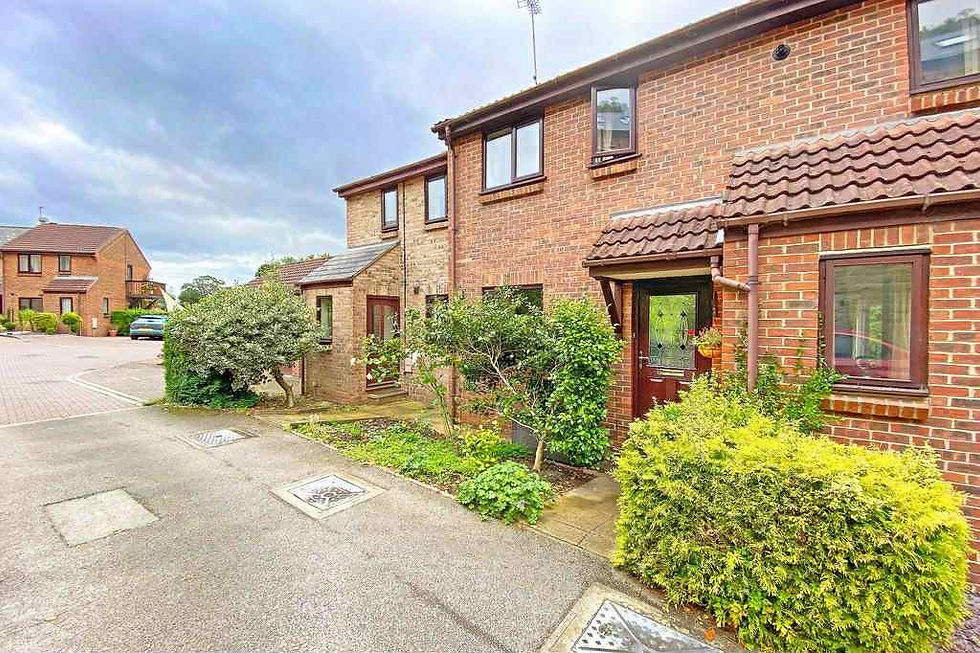
Bea’s first dwelling place was 5 Claro Mews, Knaresborough, but she wasn’t going to be there for long, just as my first home was a caravan in Southampton, where I lived for only the first six months of my life. We were in the process of putting our house in Knaresborough back on the market. We had done so in late 2021, with no success, but employing a new estate agent in 2022 brought instant results. We accepted an offer of the full asking price in August. We had to move: the little house was in a gorgeous (literally!) location, but was very cramped for a family with a dog. Bigger houses in Knaresborough, a tourist town rapidly moving upmarket, meant a massive jump in price, a rise that we could not afford. The Pennines around Holmfirth seemed a good target for a larger house at a similar price to the old one, and the area is nearer Nat’s family, in particular, Bea’s one living grandmother. And so, with some reluctance but with a strong sense that it was the right thing to do, we prepared to leave Knaresborough. The exchange of contracts happened just before my seventieth birthday. It felt rather stressful, especially as we had to find a rented property from where we would seek a new place to buy. I was on the point of making a break with the past again at 70 in a zero year (moving at 20 and 30, taking up important new jobs at 40 and 50, and semi-retiring at 60). But this time I was moving with a family and a daughter who was Yorkshire born and, so far (she is nearly three and a half years old as I write) Yorkshire bred!
Looking to the Future
I started writing my autobiographical blogs about fourteen months ago, and I have really enjoyed the effort of remembering and putting down what I think were the highlights of the various decades in my life. Thank you to all those who have read them and sometimes commented on them. I am bound to have forgotten or omitted events, places, or people that were important, but this was never meant to be a comprehensive autobiography. It is just a series of recollections that give a flavour of what it is like to be me, and which one day might be helpful to my family and friends when I am no longer able or around to recall things myself.
I am one quarter of the way through my seventies as I write (August 2025), but I will not attempt any highlights of my seventies until they are complete, when I can look back over the whole period. I hope there are still some wonderful moments to come and, given that I have a young wife and very young daughter, I very much expect that there will be! And, finally, with American presidents in their eighties, who knows what I can still achieve?


Comments